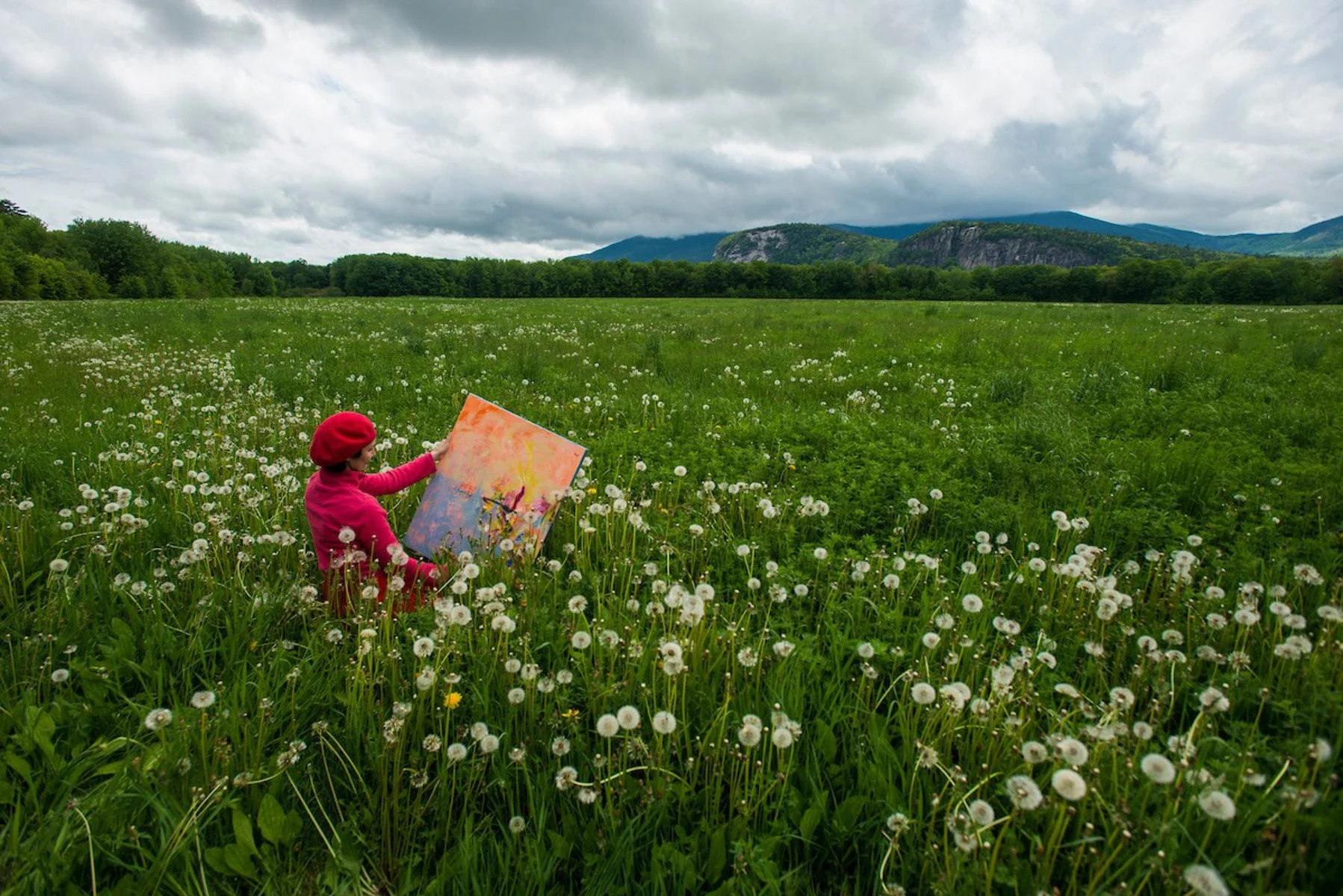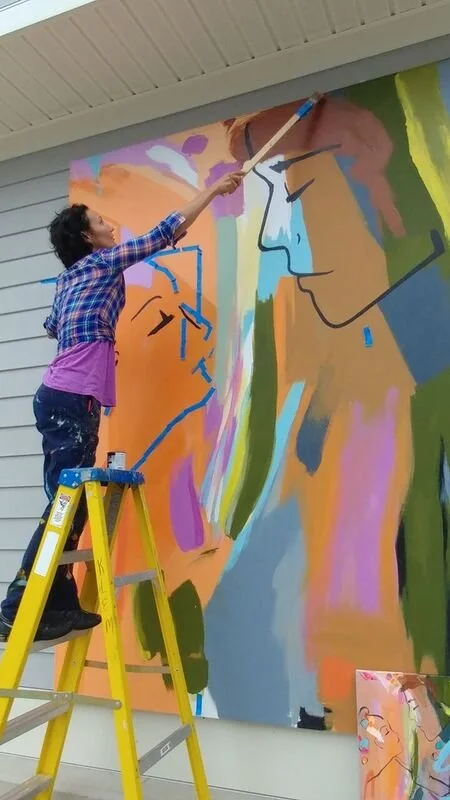
Public art by Rebecca klementovich at Settler’s green. Fine Art Mural for the public
Blog with the latest News
Transform your living space with a vibrant green art collection that spans from soft, earthy shades to bright lime hues. Choosing large fine Art paintings create a fresh, modern focal point that helps turn any ordinary house into a warm, inviting home.
Explore my website or come to my studio to find stunning green landscapes featuring dense trees, deep forests, and majestic mountains. These fine art paintings bring the peaceful beauty of the outdoors directly inside your rooms.
Explore large blue fine art paintings featuring calming lakes and grand mountain vistas in every serene shade. Visit the gallery website to discover peaceful morning skies and vibrant blue tones tailored for your space.
Blue Fine Art Collection Paintings
Shades of Blue: Vibrant rhythmic tones, quiet cloud-streaked skies, and deep horizons.
Calming Subjects: Expansive mountain views and tranquil lake reflections.
Big Paintings: Statement-size big canvas art designed to bring peace to your room.
How does a color palette define an art movement?
How does a color palette define an art movement? The history of painting in the Northeast provides a perfect timeline of this power :The Evolution of the Landscape: From Earth Tones to Pop Art
The Traditional Foundation: Thomas Cole (1801–1848), founder of the Hudson River School, anchored early American art in a somber, traditional palette. His work used natural browns and deep blues to faithfully document the untamed wilderness.
The Impressionist Shift: Eventually, a transition occurred in the White Mountains, shifting away from Cole's dark realism toward the softer, light-drenched palettes of Impressionism.
The Modernist Revolution: By 1920, American Modernism arrived in the Granite State. Influenced by French Fauvism, artists made a clean break from descriptive color, choosing highly expressive, subjective palettes instead.
The Contemporary Edge: Bringing this evolution into the 21st century, Rebecca Klementovich returned to New Hampshire in 2010. She revolutionized the local landscape tradition by introducing a vibrant Pop Art palette, using shocking brights and fuchsia pinks to redefine the mountains with modern power.
#popartcolors #thomascolenh #frenchfauvism #rebeccaklementovich #powerofcolorpalette
Fashion as Art: Kahlo was her own masterpiece, treating her daily appearance as a performance piece that matched her paintings. She was a huge influence for me in college. As a young artist, I admired her portraits and verve. My fashion Illustrations of women are a homage to her work.
Stained Textiles: Evidence of her creative process was found on her clothing, with many garments from her wardrobe stained with paint and ink, showing that she wore her art during her daily life.
Enduring Influence: Her unique, vibrant style continues to inspire fashion designers, filmmakers, and artists today, ensuring her legacy as both a trailblazing painter and a fashion icon.
These paper works are avaiilable.
"As a budding artist in 1990s SoHo, my weekends were a blur of underground raves, observing the creative quiet of the Christos on Mercer Street, and infiltrating illegal East Village graffiti galleries.
.Keith Haring and Basquiat had bits of their work wallpapered on the streets still. I was deeply moved by the transition of graffiti artists into the fine art world, a raw energy I’ve channeled into this piece. It features a portrait of an 18th-century female hiker in a bonnet, blending precise, iconic portraiture with the chaotic, outline-graphic graffiti style that defined the decade .The environment still shapes the artist.
Aryaloka is proud to present “Glow of Light,” a new modern landscape exhibition by Rebecca Klementovich. This series explores the transformative effect of sunlight on the landscapes around us, capturing the radiant glow that emerges when light meets form. Through this, objects come alive with vivid, expressive color—revealing unexpected hues that transcend realism and move into emotional and visual expression.
A key influence behind this body of work is the spirit of the Fauvist movement, led by Henri Matisse in early 20th-century France. Like the Fauves, Klementovich embraces bold, non-naturalistic color to convey feeling and atmosphere rather than literal representation.
The exhibition takes place at Aryaloka, a beautiful Buddhist center and retreat nestled in the wooded landscapes of Newmarket, on land historically stewarded by the Abenaki and Pennacook peoples. The grounds feature peaceful trails in a unique retreat center
This collection is displayed within the remarkable architectural setting inspired by Buckminster Fuller, whose pioneering work popularized the geodesic dome. Known for their strength, efficiency, and visionary design, Fuller’s structures—such as the iconic U.S. Pavilion at the 1967 Montreal World’s Fair—embody innovation and harmony with the environment. If you’ve never been in a Buckminister Fuller house, this is a unique opportunity to do so.
“ I’m so thrilled to be exhibiting within such a space is, for an artist, it is a dream realized. The combination of art, architecture, and spiritual setting creates a beautiful dialogue between light, structure, and perception,” Rebecca says.
As Fuller once expressed, these spaces offer “a sense of orientation of each human individual within the profound magnificence of the Universe… a cathedral of universal reality and a cathedral of universal mystery.”
Klementovich’s work stands in conversation with these legendary influences, bringing a contemporary voice to a timeless exploration of light, color, and form.
Www.Klementovich.com
What it is to ski during a warm day is priceless. The air is crisp and invigorating, carrying the scent of pine and the faintest hint of wood smoke from a cozy cabin nestled somewhere below. The only sounds are the crunch of skis on snow, the whoosh of the wind, and the occasional joyous shout of a skier carving a perfect turn.
This nostalgic painting of snow falling as you are skiing is a reminder of how special skiing is in New England. The bits of Gold leaf represents the sunshine on the pines.
Katherine Bradford is a widely recognized contemporary painter known for her exploration of themes like community, vulnerability, and motherhood through figures, especially swimmers and superheroes, in luminous color fields
Rebecca Klementovich's body of work tends to focus on her use of color and ability to capture the essence of nature, and her nostalgic mountains and families skiing paintings were influenced by Bradford's work. Klementovich's Fashion Illustration degree from FIT in NYC and her years as a Fashion textile designer and Illustrator flows through her paintings.
An art historical comparison can be drawn, based on their shared affinity for vibrant, luminous color and a certain "nonacademic, creative freedom" in figuration. Both artists employ color to evoke mood and atmosphere, often building up surfaces with a rich, tactile quality. Bradford is noted for her "radiant liquid fields" of color that imbue her figures with a sense of the transcendent, using variations in saturation to suggest vast spaces like the sea or sky. Klementovich is similarly praised for her "masterful use of color" and expressive, "vibrant" art. This shared commitment to color as a primary expressive tool, combined with a brave, unpolished approach to figuration, creates a compelling stylistic parallel between their respective practices, even if their narrative themes may differ in focus.
Support and enjoy local artwork. Rebecca has large modern paintings with subjects of joy and nostalgia.
#historicalpaintings